Waning Gibbous Personality Traits: The Teacher of the Moon
Quick answer: People with waning gibbous personality traits are typically reflective, generous with what they know, and driven to turn personal experience into something useful for others. If you were born a few days after a Full Moon — while the Moon was still mostly lit but visibly shrinking — you fall into this phase. It’s often nicknamed “the Teacher” because the core theme is digesting what you’ve learned and passing it on, and the phase pairs most naturally with First Quarter and Last Quarter births.
Search “waning gibbous personality traits” and you’ll find a mix of astrology blogs repeating the same three adjectives. This page goes a level deeper: what the phase actually represents in the lunar cycle, the specific traits people report, where the strengths tip into challenges, and which other phases tend to complement a Waning Gibbous temperament best.
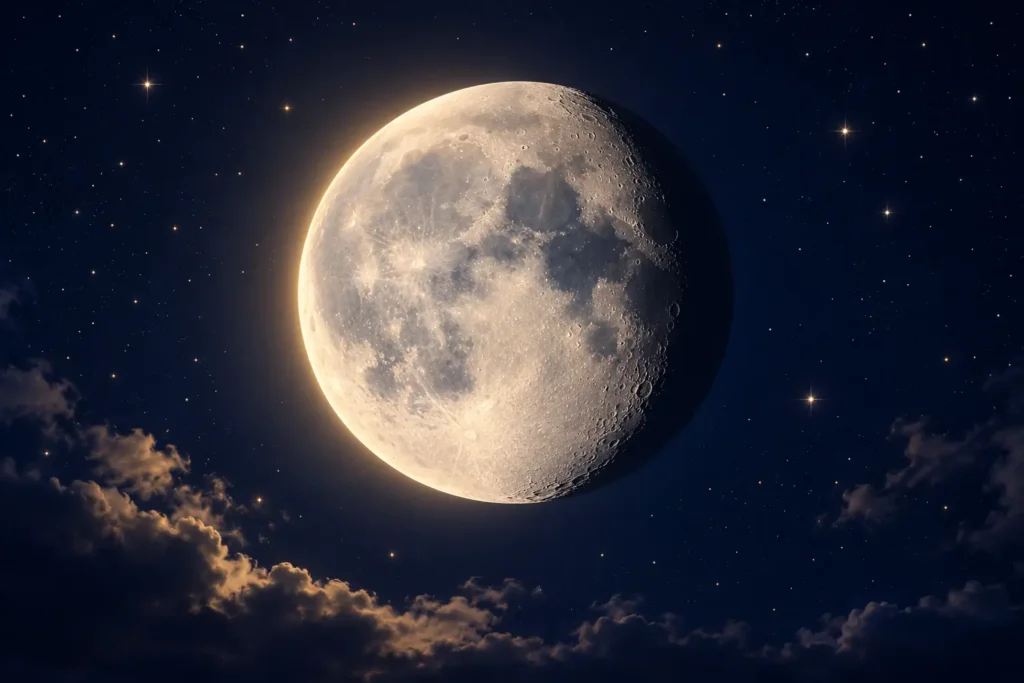
What a Waning Gibbous Birth Phase Means
The Moon takes roughly 29.53 days to move through its full cycle, from New Moon to New Moon again. A Waning Gibbous birth falls in the stretch right after the Full Moon, once illumination has passed its peak but hasn’t dropped low enough to count as Last Quarter — usually somewhere between about 50% and 99% lit, and shrinking a little more each night.
Symbolically, this placement sits right after the story’s climax. The Full Moon is the moment of maximum visibility and emotional peak; the Waning Gibbous is what comes next — processing what happened, figuring out what it meant, and starting to talk about it. That’s the root of every waning gibbous personality trait people describe: less about starting new things (that’s New Moon territory) and much more about digestion, synthesis, and sharing. If you’re not sure which of the eight phases you were actually born under, the fastest way to check is to run your birth date through a moon phase calculator rather than guess from the calendar — the exact day-of-month varies year to year, so the same birthday can land on a different phase depending on which year you were born.
Core Waning Gibbous Personality Traits
Across the astrology and lunar-personality writing that covers this phase, a handful of waning gibbous personality traits come up again and again:
- Reflective by default. Waning Gibbous people tend to process an experience thoroughly before moving on from it — replaying conversations, re-reading their own notes, circling back to a decision days later just to double-check their reasoning.
- Natural teachers and sharers. This is the trait the phase is named for. Whether it’s mentoring a coworker, explaining a hobby in obsessive detail, or writing long text messages full of advice nobody asked for, Waning Gibbous personalities are compelled to hand off what they’ve figured out.
- High in openness. Curiosity about ideas, meaning, and “why” questions runs deep — the same openness trait from the Big Five personality model that psychologists associate with a love of novelty and creativity. Small talk tends to bore this phase; a real conversation about motive or pattern does not.
- Generous and socially conscious. Agreeableness shows up as a genuine interest in other people’s growth, not just their own — Waning Gibbous types often measure their week by how much they helped someone else improve.
- Moderately extroverted, not maximally. They’ll talk for an hour once they’re interested, then need a quiet night alone to recover. It’s a communicative energy with a battery limit.
- Slow to get excited, careful with decisions. Rather than react instantly, this phase tends to run things past its own internal logic first, which can look like hesitation to faster-moving phases.
None of this comes from peer-reviewed science — birth moon phase isn’t a documented predictor of temperament in any clinical sense. These are patterns drawn from decades of lunar-astrology and personality writing, offered here as a reflective framework rather than a diagnosis, and the waning gibbous personality traits above are best read the way you’d read a personality quiz result: interesting, not definitive.
Waning Gibbous Strengths and Challenges
Every strength in this phase has a shadow side, which is part of why the waning gibbous personality traits list reads a little differently depending on the source.
Strengths: Patience with process, a genuine gift for explaining complicated things simply, loyalty once trust is built, and an ability to find the lesson in a bad situation instead of just complaining about it. People born under this phase are often the ones friends call when they need calm, considered advice rather than a hot take.
Challenges: The same reflective streak can tip into overthinking, especially when a Waning Gibbous person replays a decision long after it’s already made. The teaching instinct, unchecked, can slide into unsolicited advice-giving or a subtle need to be the one who “knows better.” And because so much energy goes into processing and sharing, this phase can neglect starting new projects of its own — perpetually the advisor, rarely the initiator.
Most Compatible Moon Phases for Waning Gibbous
Understanding these waning gibbous personality traits also helps explain why certain phase pairings feel easier than others. Compatibility here is usually framed around distance in the lunar cycle rather than a strict rulebook. A few pairings tend to come up as especially complementary for a Waning Gibbous person:
- First Quarter (The Decider): Sits roughly a quarter-cycle away, giving a natural push-pull — First Quarter’s decisive, action-first energy balances Waning Gibbous’s tendency to overanalyze before acting.
- Last Quarter (The Releaser): Close by in the cycle and thematically similar — both phases are oriented around processing and letting go, which tends to produce mutual understanding rather than friction.
- New Moon (The Initiator): An almost-opposite pairing that can work well specifically because it’s lopsided — New Moon supplies the spark and forward motion that Waning Gibbous’s reflective pace sometimes lacks.
For an exact compatibility read against a specific second birth date rather than a general phase pairing, the moon phase compatibility calculator does that math directly.
As for an illustrative picture of the type: think of the friend who, after any group trip, sends a long message the next day unpacking everything that happened and what everyone should take from it — equal parts therapist and debrief coordinator. That habit, more than any single trait on a list, sums up waning gibbous personality traits in practice.
Key Takeaways
- A Waning Gibbous birth falls in the days after a Full Moon, while illumination is still high but visibly decreasing.
- Core waning gibbous personality traits include reflectiveness, generosity, high openness, and a strong instinct to teach or mentor.
- The main growth edge is overthinking and a tendency toward unsolicited advice — the flip side of the same teaching instinct.
- First Quarter, Last Quarter, and New Moon are commonly cited as the most complementary phases for someone with these waning gibbous personality traits.
- None of this is scientifically validated; treat it as a reflective framework, similar to a personality quiz, rather than a fixed diagnosis.
Frequently Asked Questions
What does it mean if you were born under a Waning Gibbous moon?
It means your birth fell in the days just after a Full Moon, while the Moon was still brightly lit but shrinking each night. In lunar-personality frameworks, this phase is associated with reflection, processing, and a drive to share what you’ve learned — often summarized as “the Teacher” archetype, and it’s where the common waning gibbous personality traits described above come from.
What are the main waning gibbous personality traits?
The traits most consistently described are reflectiveness, generosity, curiosity, and a natural teaching instinct, alongside a moderate, rather than maximal, need for social energy. People with this placement tend to think things through carefully before acting or speaking.
Which moon phases are most compatible with Waning Gibbous?
First Quarter and Last Quarter are usually cited as the closest natural matches, since they either balance out the overthinking (First Quarter’s decisiveness) or share the same reflective wavelength (Last Quarter). New Moon can also work well as a complementary, energy-supplying opposite.
Is Waning Gibbous a “good” moon phase to be born under?
There’s no better-or-worse ranking among the eight phases — each comes with its own strengths and blind spots. The waning gibbous personality traits covered here trade fast-starting energy for depth, patience, and the ability to turn experience into something worth sharing, which plenty of people would call a genuinely good trade.
How do I find out if I was actually born under a Waning Gibbous moon?
Because the exact dates shift every year, the only reliable way is to plug your birth date into a moon phase calculator — checking the calendar by eye or guessing from the day of the month isn’t accurate, and it’s the only way to confirm whether these waning gibbous personality traits actually apply to your own birth date.